
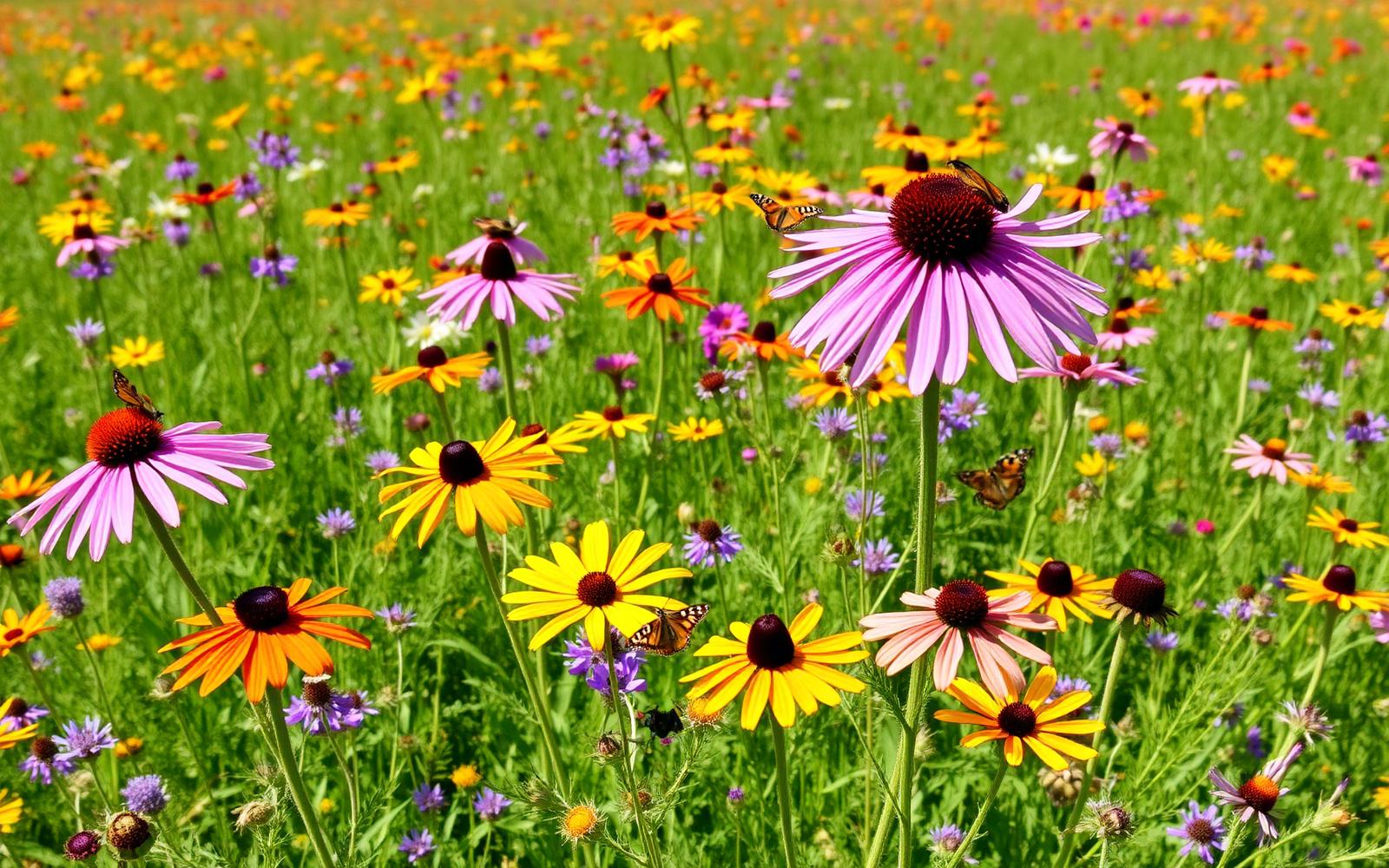
CP42 Leopold High-Diversity Pollinator
70–90 species Leopold-inspired CP42 pollinator mix for maximum bloom diversity.
Our most diverse CP42 pollinator offering — a Leopold-inspired 70–90 species mesic/dry/wet-tolerant blend with 10 grass and 30–40 forb seeds per square foot. All Iowa-ecotype seed sourced from remnant prairies. This mix delivers season-long bloom across spring, summer, and fall, exceeds CP42 requirements, and creates one of the richest planted prairie communities available.
At a glance
- Seeding rate
- 7–10 lbs PLS/acre
- Coverage / sizes
- Sold by the acre; pre-mixed with rice hulls.
- When to plant
- Dormant Nov–Mar required for cold-stratified forb germination.
- Site fit
- Dry, mesic, or wet Midwest soils — species selection is soil-tolerant.
Highlights
- 70–90 species — the deepest CP42 pollinator blend we ship
- All Iowa-ecotype forbs and grasses
- Meets CP42 spec at 10/30 or 10/40 seed count
- Continuous bloom spring through hard frost
Common use cases
- — Flagship pollinator restorations and demonstration sites
- — CP42 acres where diversity is the primary goal
- — Grant-funded projects requiring documented species richness
FAQ
How does this compare to a standard CP42?
A standard CP42 runs 30–45 species. Leopold runs 70+. You get more bloom windows, more specialist-pollinator support, and a more resilient stand — at a higher seed cost.
Does this qualify as a monarch mix?
In years when milkweed supply is tight, this mix still meets CP42 pollinator requirements but may not carry the extra milkweed load required for a designated monarch mix. Confirm current milkweed content when quoting.
Recommended in these states
CP42 Leopold High-Diversity Pollinator appears in our state guides for the regions below. Jump straight to this mix's card on the state guide.
Dormant seeding November through early March is preferred statewide for cold-stratified forbs. Frost seeding into snow works well on the Des Moines Lobe.
Dormant seeding November through early April is preferred. Snow-cover frost seeding works exceptionally well in Minnesota's cold winters.
Dormant seeding late October through March. Driftless slopes benefit from frost-seeding into thin snow cover.
Dormant November through early March. Central Illinois' deep prairie soils establish CP25 unusually well when seeded on time.
Dormant seeding late October through early March. Missouri's warm springs mean you can push into mid-April on well-drained sites, but earlier is safer.
Dormant late October through March. Michigan's Great Lakes moderation means winter dormant seeding is highly reliable.
Dormant late October through early March. Southern Indiana can extend into late March on well-drained sites.
Dormant late October through early March. Ohio's Lake Erie moderation supports reliable dormant seeding through winter.
Related mixes
88-species EQIP/CSP-eligible CP42 pollinator mix — the deepest bloom diversity we carry.
Milkweed-forward pollinator mix for monarch habitat restoration.
Multi-species milkweed enhancement mix to add monarch host plants to any prairie planting.
Ready to order or need a custom blend?
Tell us your acres, county, and CRP practice — we'll put together a quote tuned to your seeding sheet.
Request a quote for CP42 →