
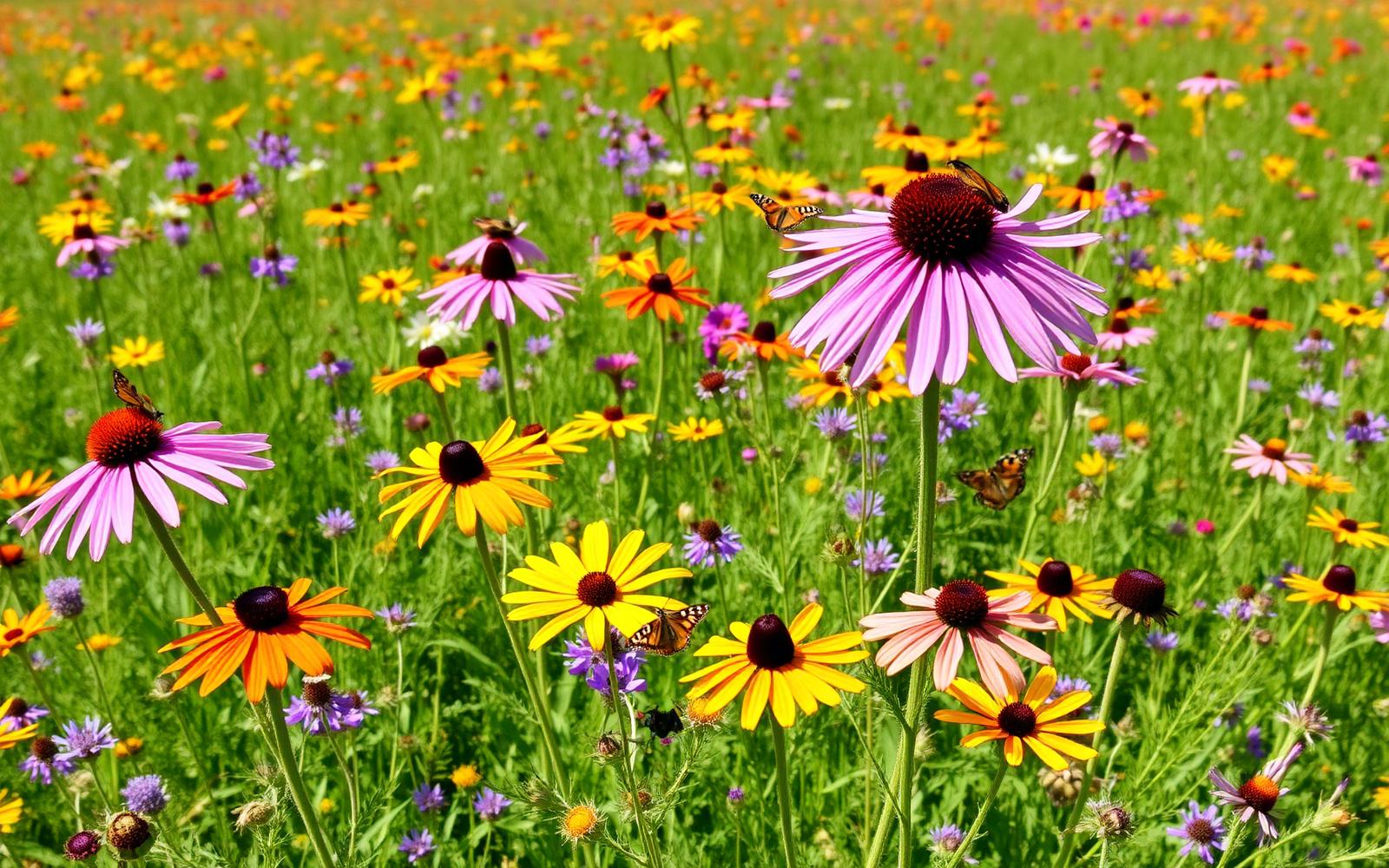
CP42 Dry Pollinator Mix
CP42 pollinator mix tuned for droughty upland sites.
A CP42 pollinator habitat blend built for droughty uplands where standard pollinator mixes struggle. Drought-tolerant forbs and shortgrass matrix hold up through dry summers while still meeting CP42 bloom-window and diversity spec.
At a glance
- Seeding rate
- 6–8 lbs PLS/acre
- Coverage / sizes
- Sold by the acre; 1/2 acre and full acre bags standard
- When to plant
- Dormant seed late fall through early spring.
- Site fit
- Sandy, gravelly, or thin upland soils.
Highlights
- Drought-tolerant native forbs
- Shortgrass matrix — little bluestem, sideoats, blue grama
- Meets USDA CP42 bloom-window spec
- Three-season bloom coverage
Common use cases
- — CP42 contracts on droughty ground
- — Sandy and gravelly upland restorations
FAQ
Why not just use the standard CP42 mix on a dry site?
Standard CP42 mixes lean on mesic forbs that thin out on droughty soils. This blend swaps them for prairie species built for the same conditions.
Recommended in these states
CP42 Dry Pollinator Mix appears in our state guides for the regions below. Jump straight to this mix's card on the state guide.
Dormant seeding late October through early March. Missouri's warm springs mean you can push into mid-April on well-drained sites, but earlier is safer.
Dormant November through March. Sandhills plantings need extra care with seeding depth — very shallow, and firm the seedbed hard.
Dormant late October through March. Frost seeding onto snow works well in the northeast pothole region.
Dormant October through April. Frost seeding onto snow is common and highly effective in the Drift Prairie.
Dormant late October through February. Spring seeding can work east of Salina but is risky west — soil moisture disappears fast.
Plant warm-season natives from February through April in most of Texas, or in late summer ahead of fall moisture in the Panhandle. Dormant winter seeding works in the northern Panhandle but is risky on the Gulf side, where warm spells trigger early germination.
Dormant seeding from December through mid-March is the most dependable approach on the eastern plains, letting seed sit until spring moisture arrives. Spring seeding in April and May works when soil moisture is adequate; avoid dry summer plantings.
Dormant seeding from late October through March is the standard across Montana — winter cold stratifies native seed and spring snowmelt drives germination. Early-spring seeding in April is a workable second option; summer seeding rarely succeeds.
February through April is the primary window for warm-season natives statewide. Late-winter dormant seeding works well in the Panhandle and northern tier; avoid seeding into summer heat.
Dormant seeding from late October through March is the standard, using winter to stratify seed and snowmelt to trigger germination. Spring seeding is possible in April on sites with stored soil moisture.
Related mixes
Ready to order or need a custom blend?
Tell us your acres, county, and CRP practice — we'll put together a quote tuned to your seeding sheet.
Request a quote for CP42 →