
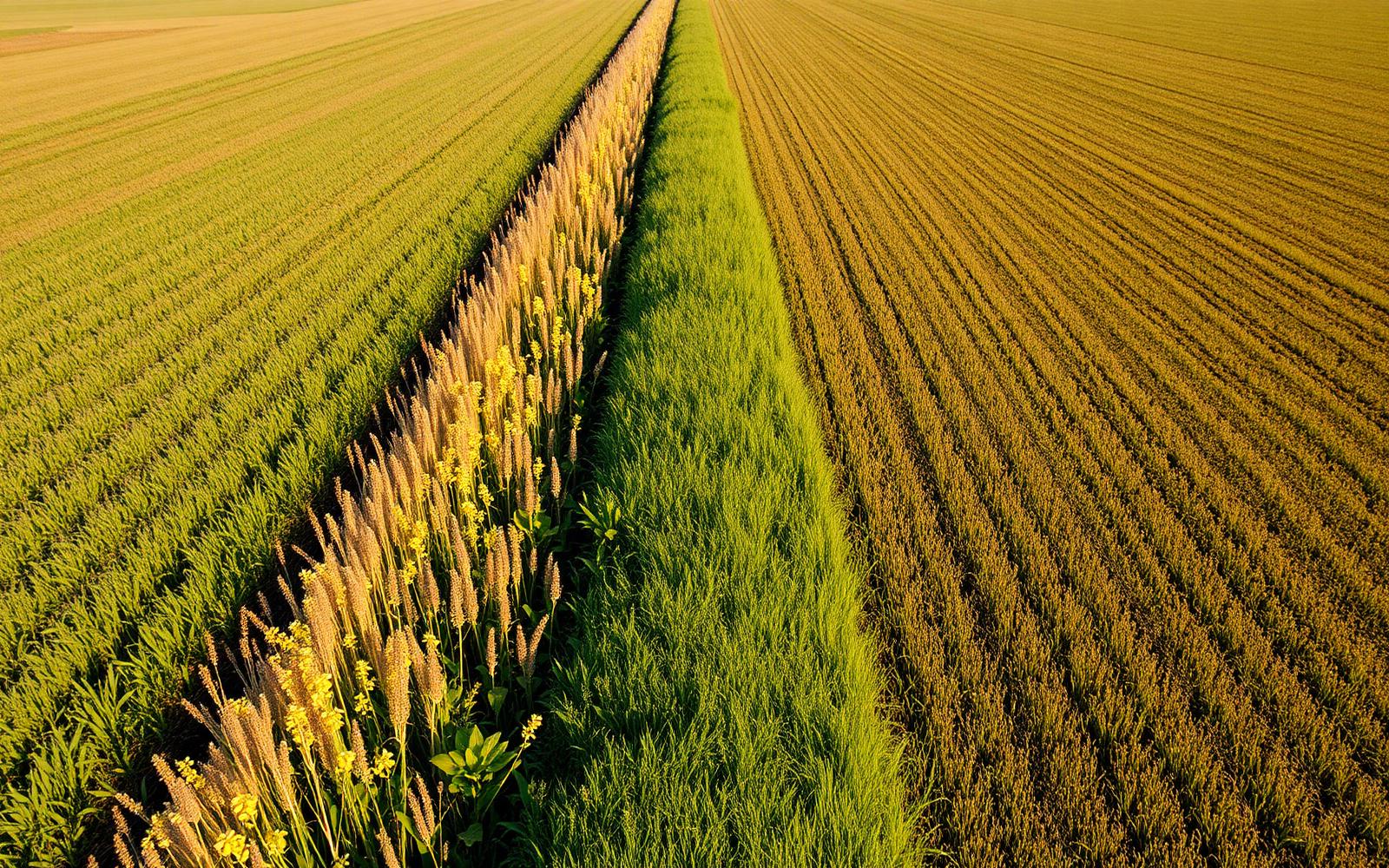
CP21 Filter Strip Mix
Native grass filter strip mix for CP21 water-quality buffers.
Our CP21 filter strip mix is built to intercept runoff along field edges and waterways. A dense, deep-rooted native grass matrix slows sediment and captures nutrients before they reach streams and ditches.
At a glance
- Seeding rate
- 8–10 lbs PLS/acre
- Coverage / sizes
- Sold by the acre; 1/2 acre and full acre bags standard
- When to plant
- Dormant seed late fall through early spring; spring drilling also works.
- Site fit
- Field edges along streams, drainageways, and grassed waterways.
Highlights
- Meets USDA CP21 filter-strip spec
- Dense native grass matrix for sediment capture
- Deep roots for nutrient uptake
- Optional forb overseed available
Common use cases
- — CP21 filter strips along cropped ground
- — Grassed waterway edges
- — Riparian buffer strips
FAQ
How wide should a CP21 strip be?
Practice standards vary by state, but most CP21 filter strips run 30–120 feet wide. Check your county NRCS sheet for the required width on your contract.
Recommended in these states
CP21 Filter Strip Mix appears in our state guides for the regions below. Jump straight to this mix's card on the state guide.
Dormant seeding November through early April is preferred. Snow-cover frost seeding works exceptionally well in Minnesota's cold winters.
Dormant November through early March. Central Illinois' deep prairie soils establish CP25 unusually well when seeded on time.
Dormant late October through early March. Southern Indiana can extend into late March on well-drained sites.
Dormant late October through early March. Ohio's Lake Erie moderation supports reliable dormant seeding through winter.
Related mixes
Ready to order or need a custom blend?
Tell us your acres, county, and CRP practice — we'll put together a quote tuned to your seeding sheet.
Request a quote for CP21 →